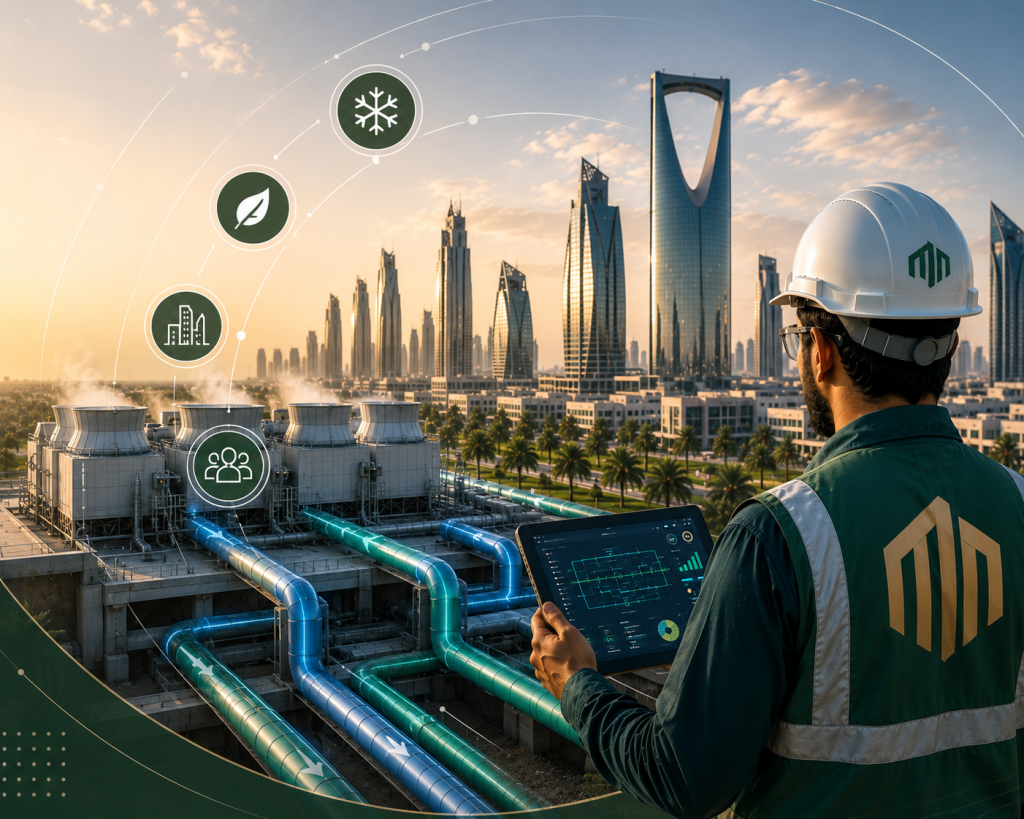
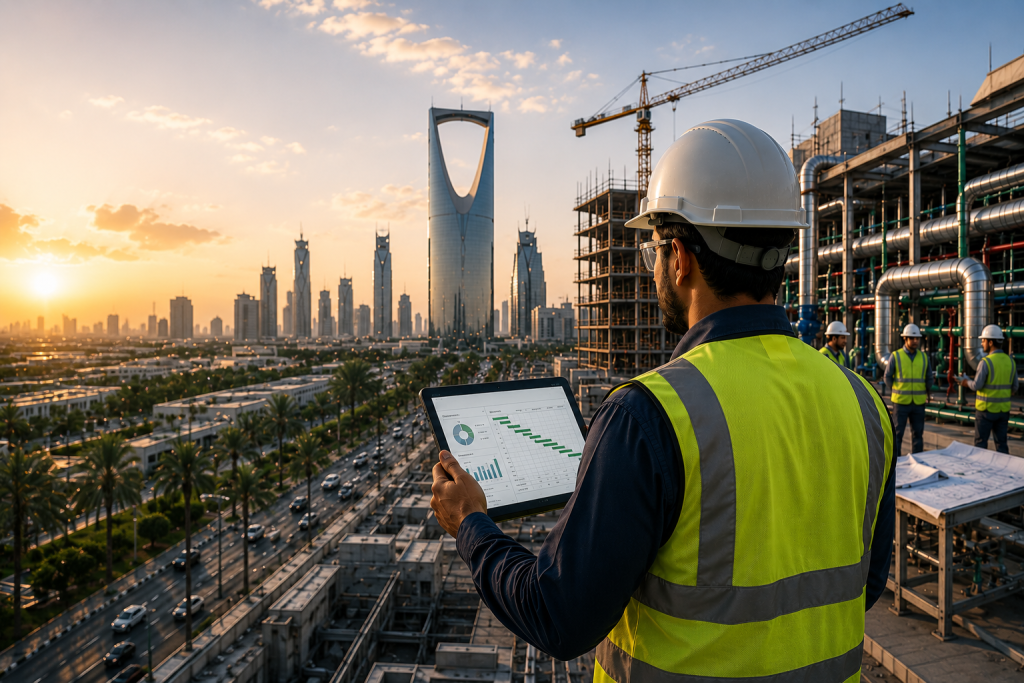
An overview of ELV systems, scope, standards, and how to choose the right contractor in the Kingdom.
Behind the walls of every modern building runs a second, quieter network. Not the mains power that drives the lifts and the air conditioning, but the low-voltage systems that make a building secure, connected, safe, and smart: the cameras that watch over it, the readers that control who enters, the alarms that protect lives, the cabling that carries its data. These are the low current, or Extra-Low-Voltage (ELV) systems — and in Saudi Arabia’s Vision 2030 era of smart, connected infrastructure, they have become one of the most important disciplines in the entire construction of a building.
What Are Low Current (ELV) Systems?
Low current systems — also called Extra-Low-Voltage (ELV) systems — are the building systems that carry data, signals, and control rather than mains power, typically operating below 50 volts. The term is used in construction to describe any system in a structure that needs electricity but is not part of the building’s primary high-current electrical system. Where high current systems handle mains power for lighting and equipment, low current systems handle the intelligence: communication, security, safety, and automation.
Together, these systems form the intelligent backbone of a modern building. They are what allow a building to be monitored, secured, communicated through, and managed — and as buildings in the Kingdom become smarter and more connected under Vision 2030, the sophistication and importance of their ELV systems has grown accordingly. The most common low current systems include:
- CCTV and video surveillance — IP cameras, remote monitoring, and video analytics
- Access control — biometric readers, smart cards, and RFID entry management
- Fire alarm and detection — life-safety systems to Civil Defence standard
- Public address and voice evacuation (PA/VA) — announcements and emergency communication
- Structured cabling and fibre optic — the data and communications infrastructure
- IP telephony, intercom, and door entry systems
- Building Management System (BMS) integration
- IPTV/MATV, AV, and digital signage
- Specialist systems — nurse call, gate barriers and parking, and master clock systems
01. Market Context: Why ELV Demand Is Accelerating in the Kingdom
As Saudi Arabia pushes forward with Vision 2030, the demand for smarter, safer, and more efficient infrastructure is accelerating — and at the core of this transformation are low current systems. From fire alarms and CCTV to building automation and energy monitoring, ELV systems are now seen as essential, not optional, with billions being invested into them across both new projects and retrofits of existing buildings.
Three forces are driving this growth. First, the smart building standard: integrated BMS platforms are becoming the norm, helping operators manage HVAC, lighting, access, and security from a single point. Second, sustainability: energy efficiency is central to the Kingdom’s environmental goals, and smart sensors and automation help cut waste and reduce carbon footprints. Third, modernisation: many existing facilities are upgrading their ELV systems to meet today’s safety and performance expectations, extending the life of older buildings. Across new giga-projects, commercial towers, and retrofits alike, low current systems have moved from a finishing trade to a core building discipline.
As Saudi Arabia pushes forward with Vision 2030, the demand for smarter, safer, and more efficient infrastructure is accelerating. At the core of this transformation are low current systems — from fire alarms and CCTV to building automation and energy monitoring.
— Industry commentary on the future of low current systems in Saudi Arabia, 2026
02. Scope of Work: What a Low Current Contractor Delivers
A capable low current contractor covers the full lifecycle of every ELV system — design, supply, installation, commissioning, and maintenance — ideally under a single contract and a single point of accountability. The scope typically groups into four families of systems.
Surveillance and Security
CCTV and IP video surveillance with remote access, motion detection, and video analytics; access control using biometric, smart card, and RFID readers; intrusion detection; and video intercom and door entry. These systems provide constant monitoring, timely alerts, and controlled access — the foundation of a secure building.
Life Safety
Fire alarm and detection, public address, and voice evacuation systems engineered to Saudi Civil Defence approval. Life-safety ELV is the most tightly regulated category, and it must be designed and commissioned to code without compromise, because occupancy approval depends on it.
Network and Communications
Structured cabling, fibre optic, IP telephony (IP-PBX), and the data infrastructure that supports a building’s IT and communication needs. Reliable structured cabling is the physical layer on which every other connected system depends — and it should be installed to recognised international standards such as BICSI.
Building and AV Systems
BMS integration, IPTV/MATV, audio-visual systems, digital signage, and specialist systems such as nurse call in hospitals or master clocks in institutional buildings. Increasingly, the value lies in integrating all of these into a single, unified, easy-to-manage platform rather than operating them as separate silos.
A defining principle of low current contracting: the value is in the integration. A building that has CCTV from one vendor, access control from another, and a fire alarm from a third — none of them talking to each other — is far less than the sum of its parts. The best low current contractors integrate every system into one platform, delivered under one warranty and one point of accountability, so the systems work together rather than merely coexist.
03. Standards and Compliance
Low current work in Saudi Arabia is governed by national codes and international standards. A credible contractor must be fluent in all of them — particularly for the life-safety systems where compliance is a legal precondition of occupancy.
| Standard / Authority | Domain | Application to ELV Work |
|---|---|---|
| Saudi Civil Defence | Fire & life safety approval | Mandatory for fire alarm, PA, and voice evacuation |
| SBC 801 | Saudi fire code | Fire detection and alarm system design |
| SBC 401 | Electrical installations | Low-voltage wiring and installation practice |
| BICSI Standards | Structured cabling | International best practice for cabling and networks |
| SASO | Product safety & conformity | Certified equipment and components |
| Vision 2030 Smart Standards | Smart building requirements | Integrated, energy-efficient ELV specification |
Because life-safety systems must be approved by Saudi Civil Defence and engineered to SBC 801 and SBC 401 codes, the contractor’s regulatory competence directly affects whether a building can legally open. This is why many owners prefer a single accredited contractor for all ELV systems — one who designs, supplies, installs, commissions, and maintains them — rather than a chain of vendors who blame one another when an approval stalls.
04. Sectors and Applications
Low current systems are required across every building type, but their configuration and priorities vary sharply by sector. A contractor with genuine multi-sector experience understands that a hospital, a shopping mall, and an industrial plant impose very different ELV requirements.
| Sector | ELV Priority | Typical Systems |
|---|---|---|
| Healthcare | Life safety, patient systems | Nurse call, CCTV, access control, fire |
| Commercial Towers | Security, connectivity, BMS | Structured cabling, access, CCTV, BMS |
| Hospitality | Guest experience, safety | IPTV, AV, PA, CCTV, door entry |
| Retail & Malls | Surveillance, public address | CCTV, PA/VA, parking, digital signage |
| Industrial | Security, safety, monitoring | CCTV, access control, fire detection |
| Government & Institutional | Security, compliance | Access control, CCTV, master clock, PA |
Geographically, demand spans the Kingdom. Low current contractors serve corporate headquarters and government buildings in Riyadh; residential towers and shopping malls in Jeddah; industrial plants and commercial complexes in Dammam and Khobar; and hotels, mosques, and pilgrimage-related facilities in Makkah and Madinah. Wherever Vision 2030 is expanding the Kingdom’s cities and smart infrastructure, the demand for advanced, well-integrated low current systems follows.
05. How to Choose a Low Current Contractor in Saudi Arabia
The right low current contractor delivers systems that are secure, compliant, integrated, and reliable for years. The following criteria define a provider worth choosing.
- Single-Source Integration — Choose a contractor who designs, supplies, installs, commissions, and maintains all ELV systems under one contract. A single point of accountability means matched equipment, one warranty desk, and no vendors blaming each other when something goes wrong.
- Civil Defence & Code Competence — Confirm the contractor’s fluency with Saudi Civil Defence approval and SBC 801 / SBC 401 codes for life-safety systems. Regulatory competence here directly determines whether the building can obtain occupancy approval.
- Genuine Integration Capability — Verify the contractor can integrate CCTV, access control, fire, and BMS into a unified platform — not just install them as separate systems. Integration is where the real value of modern ELV lies.
- Certified Workmanship & Standards — Confirm the contractor installs to recognised international standards such as BICSI for structured cabling, using tested and certified equipment. The quality of the physical installation determines the reliability of everything built on top of it.
- Multi-Sector Track Record — Look for verifiable experience in your building type — healthcare, commercial, hospitality, industrial, or institutional. Each sector has distinct ELV requirements that are best learned on prior projects, not yours.
- Maintenance & Support — Confirm the contractor provides dedicated maintenance teams and ongoing support. ELV systems protect and connect a building every day; they require reliable maintenance to keep performing, not just competent installation.
Al Sharqawi Co: Integrated Low Current Systems for the Kingdom
At Al Sharqawi Co, we deliver low current systems as what they truly are — the intelligent backbone that makes a building secure, connected, safe, and smart. We design, supply, install, commission, and maintain every ELV system under a single contract and a single point of accountability, so that the systems work together as one integrated platform rather than a collection of disconnected parts.
As a low current systems contractor in the Kingdom, Al Sharqawi Co delivers the full ELV scope — CCTV and video surveillance, access control, fire alarm and voice evacuation, structured cabling and networks, IP telephony, BMS integration, AV and digital signage, and specialist systems — engineered to Saudi Civil Defence approval, SBC 801 and SBC 401 codes, and international standards such as BICSI, across healthcare, commercial, hospitality, retail, industrial, and institutional projects.
Our approach rests on three commitments: single-source integration, so every system is matched, certified, and covered by one warranty; regulatory competence, so life-safety systems are approved without delay; and genuine platform integration, so CCTV, access, fire, and BMS operate as one intelligent, easy-to-manage whole — backed by dedicated maintenance that keeps every system performing for the life of the building.
06. The Future of Low Current Systems in Saudi Arabia
Low current systems sit at the centre of Saudi Arabia’s smart-building future, and their role is only expanding. As the Kingdom builds smart cities, embeds technology into every layer of the built environment, and pursues its Vision 2030 efficiency and sustainability targets, ELV systems are becoming more capable, more integrated, and more essential.
The defining trend is convergence. CCTV, access control, fire, communications, and building management — once separate systems installed by separate trades — are increasingly delivered as one integrated, IoT-connected, intelligently managed platform. Smart sensors and automation are helping operators cut energy waste and reduce carbon footprints, aligning ELV directly with the Kingdom’s sustainability goals. And as older facilities modernise, retrofit demand is adding to the wave of new construction.
The low current contractors who will lead the Kingdom are those who can deliver genuine integration — secure, compliant, connected, and intelligent buildings — rather than disconnected systems. In an era where a building’s intelligence is as important as its structure, the ELV contractor has become one of the most consequential partners in its construction.
Ready to Build Your Intelligent Building
Whether you are constructing a new development, upgrading an existing facility, or integrating your building’s systems onto a single platform, Al Sharqawi Co brings the single-source integration, regulatory competence, and certified workmanship that low current systems in the Kingdom demand.
Contact Al Sharqawi Co: sharqawi@sharqawi-co.com | www.sharqawi-co.com
References & Sources
1. Cloud Networks. (2026). Low Current (ELV) Systems in Saudi Arabia — CCTV, Access Control, Fire, BMS & Structured Cabling. cloudnts.com
2. DTC (Dorar Tammam Contracting). (March 2026). Top MEP & Low Current Systems Contractors in Saudi Arabia. dtc.sa
3. Muassasah Mwad AlTshyd (MMTL). (2026). The Future of Low Current Systems in Saudi Arabia. mmtl-tech.com
4. MSWC (Maitham Salman Al-Wakeel Contracting). (2026). Low Current Systems Services. mswc.sa
5. ControlTap. (2026). Low Current Systems / ELV Systems — CCTV, Access Control, AV. controltap.com
6. Advanced Facilities (AFCC Global). (2026). Reliable Low Current Systems in Saudi Arabia. afccglobal.com
7. Nastech Group. (2026). ELV Services in Saudi Arabia & Bahrain. nastechgroup.com
8. Saudi Building Code National Committee. (2026). SBC 801 (Fire) & SBC 401 (Electrical). sbc.gov.sa
9. Saudi Civil Defence. (2026). Fire & Life Safety System Requirements. 998.gov.sa
10. Saudi Vision 2030 Official Portal. (2026). Smart Infrastructure & Digital Transformation. vision2030.gov.sa